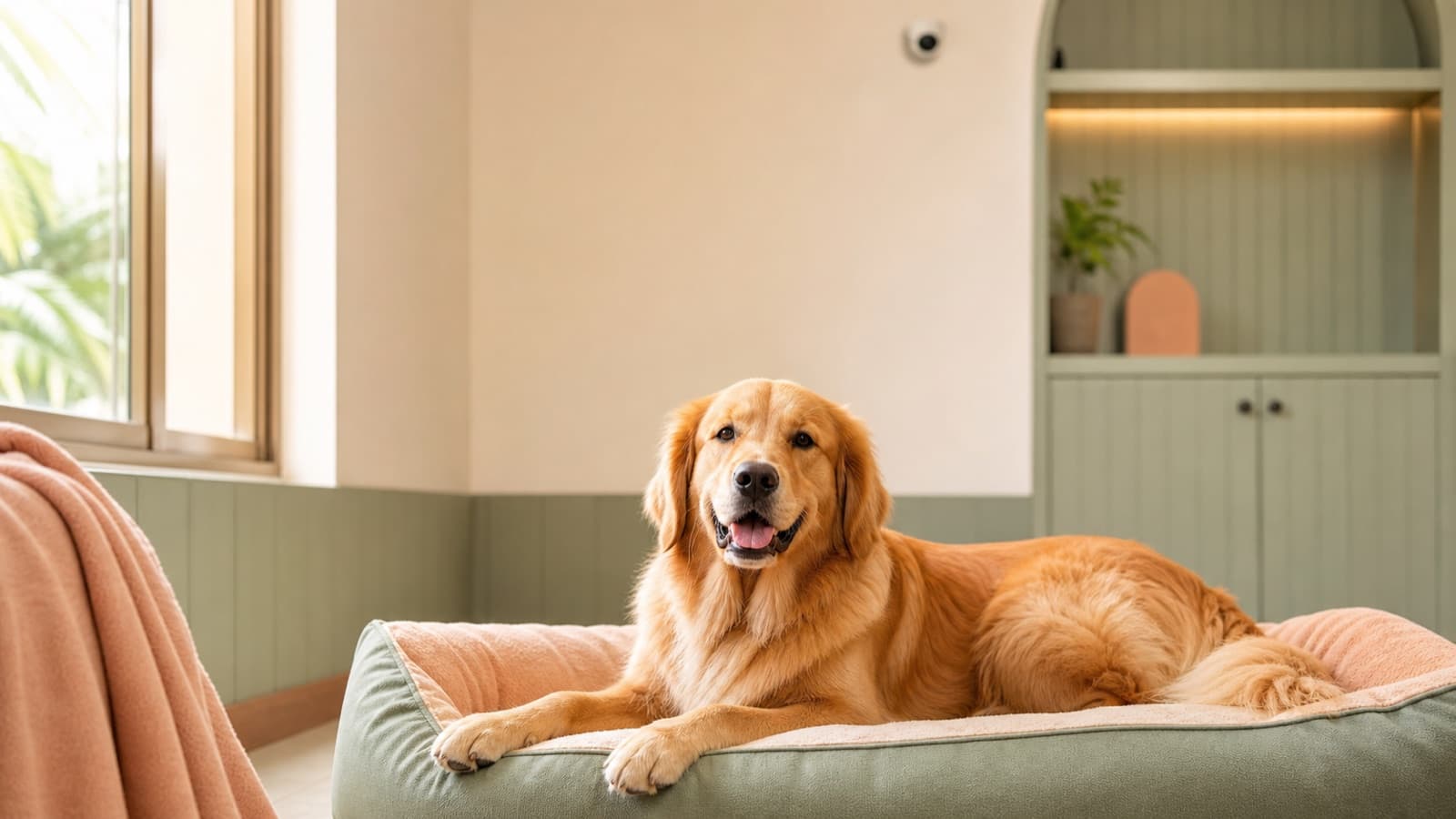
Booking pet boarding in the Philippines for the first time raises real questions. How much does it actually cost, will your dog be safe, and what happens if you're overseas and something goes wrong. This guide covers what a Filipino pet owner needs before dropping a dog or cat off at a pet hotel, from realistic nightly rates to the vaccination record you need to bring along.
You'll find a first-stay checklist, how to prepare an anxious dog, what to pack, the questions worth asking on a facility tour, and why CCTV monitoring matters more here than in a lot of other countries. There's also a comparison table for daycare versus overnight versus long-stay boarding, and a list of red flags that should send you looking elsewhere. Everything below is written for someone booking a stay in Metro Manila, most of it directly useful whether you're in Parañaque, Quezon City, or anywhere else in the country.
How Much Does Pet Boarding Philippines Cost Per Night?
Nightly rates vary by facility, location, and your dog's size. At The Bark Alley in Don Bosco, Parañaque, boarding starts at ₱500 per night, with CCTV monitoring, daily sanitation, and exclusive playtime included in that base rate. Larger dogs and premium rooms typically cost more.
Across Metro Manila generally, expect a wide range depending on what's included. A no-frills kennel-style stay can run lower, while a facility offering play sessions, grooming add-ons, and private rooms sits higher. Ask exactly what's included in the quoted rate before you book, because two facilities quoting a similar nightly price can offer very different levels of care.
| Boarding option | Best for | Typical cost pattern | What's usually included |
|---|---|---|---|
| Daycare (drop off and pick up same day) | Owners working a long shift who don't want to leave a dog home alone | Priced per day, lower than an overnight stay | Supervised play, feeding if arranged, no overnight room |
| Overnight boarding | Trips of one night to about a week | The Bark Alley starts at ₱500 per night, varies by size | 24/7 CCTV-monitored room, daily sanitation, exclusive playtime |
| Long-stay or monthly boarding | Owners traveling abroad, moving, or renovating | Usually a discounted per-night rate negotiated for the full stay | Same daily care as overnight boarding, billed as a package |
| Pet sitter at home | Dogs who do poorly outside their own environment | Priced per visit or per day by the sitter | Familiar surroundings, but far less supervision than a monitored facility |
| Bringing your dog along | Short, pet-friendly trips | No boarding fee, but added travel costs | Full-time company, but not realistic for every trip or destination |
If you're weighing whether a full groom before or after the stay makes sense, our dog grooming guide for the Philippines covers what a full groom includes and what it costs, starting at ₱550.
What Should You Prepare Before Your Dog's First Boarding Stay?
A first boarding stay goes smoother when you prepare a few things ahead of time instead of packing the night before.
- Vaccination record. Bring the physical booklet or a clear photo of it. Most facilities will not accept a pet without proof.
- Feeding schedule. Write down exact meal times, portion sizes, and the brand of food your dog eats, so staff can match your routine.
- Medication list, if any. Include the name, dosage as prescribed by your vet, and the time it's given. Do not adjust dosages yourself; only follow what your vet prescribed.
- Emergency contact. Leave a number that's actually reachable while you're away, plus a backup contact if you'll be unreachable for stretches of the trip.
- A trial run. If it's genuinely your dog's first time away from you, consider a single daycare or overnight stay a few weeks before a longer trip, so both of you know what to expect.
How Do You Help a Dog With Separation Anxiety Before Boarding?
Some dogs handle boarding without any fuss. Others pace, bark, or refuse food for the first day or two. A few steps in the weeks before a stay can make a real difference.
Practice short absences at home first. Leave for ten minutes, then thirty, then a few hours, so your dog learns that you leaving isn't the same as you disappearing for good. Keep your actual goodbye low-key. A long, emotional send-off tells your dog something is wrong, while a calm, brief one signals that this is routine.
Bring something that smells like home. An unwashed shirt or their usual bed helps some dogs settle faster in a new room. Ask the facility how they handle an anxious dog specifically. A good pet hotel will describe a real routine, extra playtime, a calmer part of the facility, gradual introduction, rather than a vague reassurance that "he'll be fine."
If your dog has a history of severe anxiety, destructive behavior, or self-injury when left alone, talk to your vet before the trip. That level of anxiety sometimes needs a plan beyond what a boarding facility alone can manage.
What Should You Pack for Your Dog's Pet Hotel Stay?
Pack for the actual length of the stay, not the bare minimum. A few essentials cover almost every trip.
- Enough of your dog's regular food for the full stay, plus two or three extra days in case travel plans shift.
- Any medication in its original, labeled container, with written instructions on dose and timing.
- A leash and collar or harness with an ID tag, even if the facility provides its own.
- One familiar item, a small blanket, toy, or worn shirt, to help with the adjustment.
- A copy of the vaccination record, separate from the original if you're also handing over the original booklet.
Skip bringing your dog's entire toy collection or a food bowl if the facility already provides one; ask what's supplied before you overpack. For a broader look at getting around the city with a pet in tow, our Parañaque pet owner guide covers transport options, pet-friendly spots, and local logistics.
What Vaccinations Does Your Dog Need Before Boarding in the Philippines?
Philippine boarding facilities commonly require two things: the 5-in-1 (or DHPPiL) vaccine and an anti-rabies vaccine, both current and recorded in your pet's vaccination booklet. The 5-in-1 covers distemper, hepatitis, parainfluenza, parvovirus, and leptospirosis, five diseases that spread easily in a shared space with other animals.
Bring the actual booklet or a clear photo of every page showing the vaccine name and the date given. A verbal "yes, he's vaccinated" without documentation usually isn't accepted, and that's a reasonable policy protecting every other pet staying there at the same time.
If your dog's vaccines are close to expiring, renew them before the stay rather than during it. Cats generally need their core vaccines current too; ask your chosen facility for their specific cat requirements, since some differ slightly from dog policies. Any question about which vaccines your specific dog or cat needs, and when, belongs with your vet, not a boarding facility's front desk.
What Should You Ask When Touring a Pet Boarding Facility?
A short list of direct questions during a facility tour tells you more than any marketing photo.
- How many staff are on-site overnight, and what's the actual dog-to-staff ratio during the day?
- Can you see the actual room your dog will stay in, not just a show room near the entrance?
- What happens if my dog gets sick or injured while I'm unreachable?
- How is CCTV footage handled, and can an owner request to view it?
- What's the cleaning and sanitation schedule for rooms and shared play areas?
- How do you separate dogs by size or temperament during group playtime, if any?
Ask to walk through during business hours rather than accepting only photos or a video call. A facility with nothing to hide will generally welcome the visit.
Why Does CCTV Matter When Choosing a Pet Hotel in the Philippines?
Leaving a dog somewhere you can't see is uncomfortable for most owners, and that discomfort is reasonable. CCTV monitoring gives you a way to verify, not just trust, that staff are actually checking on your dog, that play sessions happen as promised, and that a room stays clean between visits.
At The Bark Alley, every room runs on 24/7 CCTV alongside daily sanitation and exclusive playtime, so care isn't something you're only told about after pickup. When you're comparing facilities, ask directly whether cameras cover the actual boarding rooms and play areas, not just the lobby, and whether footage is kept long enough to review after the fact if a concern comes up.
This matters even more for a longer trip. A week or two away with no way to check in is a harder ask than an overnight stay, and CCTV closes part of that gap even when you can't physically visit.
How Far Ahead Should You Book Boarding for Christmas, New Year, or Undas?
Boarding demand spikes hard around a few points on the Philippine calendar, and slots at good facilities fill up well before the dates themselves.
Christmas and New Year bring two overlapping pressures: families traveling to the province, and fireworks anxiety that makes many owners choose boarding over leaving an anxious dog home alone during the noise. Undas, the late-October to early-November period around All Saints' and All Souls' Day, brings a similar travel surge as families head to cemeteries and hometowns, often for several days at once. Holy Week functions the same way, with a large share of Metro Manila leaving the city at once.
Book at least two to three weeks ahead of any of these windows, and earlier if you need a specific room type or size category. Facilities that stay CCTV-monitored and properly staffed don't expand capacity just because demand spikes, so the well-run ones sell out first.
Should You Choose Daycare, Overnight, or Long-Stay Boarding?
The right choice depends on how long you'll actually be away and how your dog handles time apart from you.
Daycare suits a single long workday or errand-heavy day when leaving a dog home alone for eight-plus hours isn't ideal. It's a same-day drop-off and pickup, with supervised play but no overnight room. Overnight boarding fits a weekend trip, a short work travel, or any stay of one night to about a week, and it's where CCTV monitoring and a proper daily routine matter most. Long-stay or monthly boarding makes sense for owners traveling abroad, relocating, or dealing with a home renovation that isn't pet-safe; ask about a discounted long-stay rate rather than paying the standard nightly price for a month straight.
If your dog has never spent a night away from home, consider a daycare visit or one overnight stay before committing to a longer trip, so you can see how they handle it first.
What Happens If Your Dog Gets Sick While Boarding?
A well-run facility has a plan for this before it happens, and you should hear that plan clearly on your tour rather than assuming it exists.
Ask what symptoms trigger a call to you immediately versus what's monitored and mentioned at pickup. Vomiting once, mild lethargy after a long play session, or a slightly reduced appetite on the first day are common and usually not urgent. Vomiting that continues, refusal to eat for more than a day, labored breathing, or noticeable pain are signs staff should escalate right away, not wait out until you're back.
Confirm whether the facility has a relationship with a nearby vet clinic and the authority to bring your dog in if you're unreachable during an emergency. Leave written permission for basic emergency care if your chosen facility asks for it. None of this replaces your own vet's judgment; if you're ever unsure whether a symptom your dog showed during boarding needs follow-up, call your vet and describe exactly what happened.
What Red Flags Mean You Should Walk Away From a Boarding Facility?
A few warning signs are worth taking seriously, even if everything else about a facility looks fine.
- No vaccination requirement at all, or acceptance of a pet with no proof of vaccination.
- Refusal to let you see the actual room where your dog will stay.
- No camera coverage of boarding rooms or play areas, especially if the facility claims round-the-clock supervision without a way to verify it.
- Vague or evasive answers about staff-to-dog ratios or overnight coverage.
- A strong, unaddressed odor or visibly unclean common areas during a daytime visit.
- No clear plan for a medical emergency, or reluctance to share which vet they'd call.
Trust what you see on the actual tour over what a listing or a sales pitch promises. If something feels off, it usually is, and there are enough facilities in Metro Manila that you don't need to settle.
Ready to Book Your Dog's Boarding Stay?
Pet boarding works best when you treat it as a routine part of pet ownership, not a last-minute scramble before a trip. Prepare the vaccination record early, pack for the actual length of the stay, ask direct questions on a tour, and book well ahead of Christmas, Undas, and Holy Week.
The Bark Alley boards dogs and cats in Don Bosco, Parañaque, with 24/7 CCTV, daily sanitation, and exclusive playtime included from ₱500 per night, and we also serve owners across BF Homes, Sucat, Moonwalk, and Merville. If you're closer to the southern side of the city, see our Sucat pet boarding page for details, or visit our pet hotel in Don Bosco directly. Call 0918 552 8574 to check availability or book a room for your dog or cat.