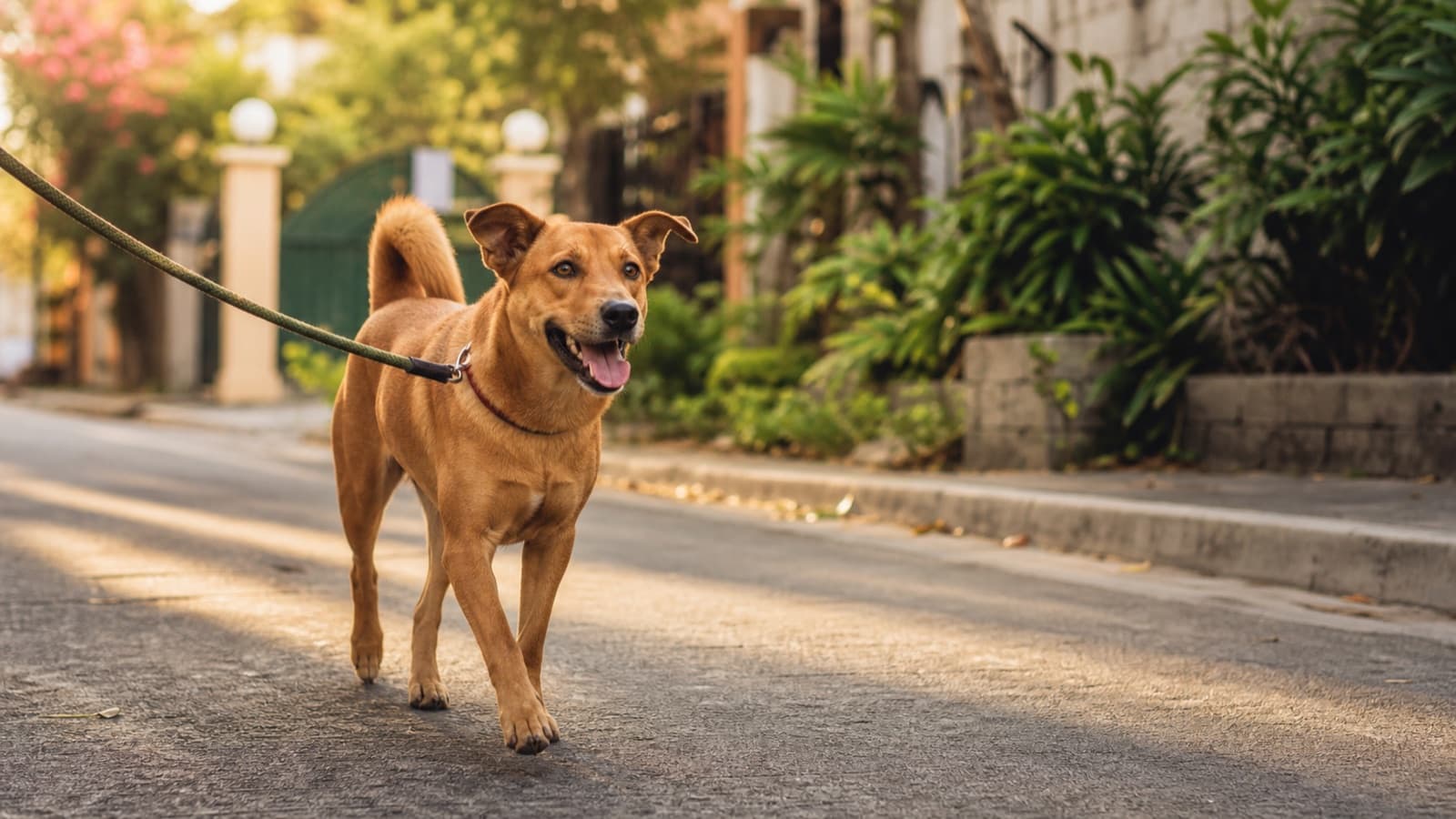
Parañaque is home to thousands of dogs and cats, and the city has its own rules, risks, and resources that a generic Metro Manila pet post will not cover. This pet owner guide paranaque residents can use year round pulls together what actually applies here: barangay dog registration, anti-rabies vaccination drives, real places to walk a dog, what to do about strays, and how to prepare a pet for rainy season, fireworks, and tag-init heat.
None of this is theoretical. It is the same set of questions we get asked at the counter every week, from new BF Homes transplants to long-time Don Bosco families dropping off a dog for a groom.
What does a complete pet owner guide paranaque residents actually need?
A useful local guide covers four things: the legal basics (registration and vaccination), the practical basics (where to walk, where to shop, who to call), the seasonal basics (rainy season, fireworks, heat), and how to pick a service you can trust. Skip any one of those and you are left guessing at the exact moments it matters most.
We built this guide in that order. Read straight through if you are new to pet ownership in the city, or jump to the section you need with the headings below.
How do you register your dog with your barangay in Parañaque?
The national Anti-Rabies Act (Republic Act 9482) requires every dog owner in the Philippines, Parañaque included, to register their dog with their local government and keep its rabies vaccination current. Registration itself is handled at the barangay level, not citywide, so the exact desk and process can vary slightly from one barangay to the next.
In practice, that means your first stop is your own barangay hall, not the city hall. Bring your dog's vaccination record if you already have one, and ask the barangay health or veterinary aide on duty what their current registration process requires.
If you just moved to a subdivision like BF Homes, Better Living, or one of the villages off Dr. A. Santos Avenue, register with the barangay that subdivision falls under, not the barangay next door. Homeowners' association offices can usually point you to the right barangay hall if you are unsure which one that is.
Where do anti-rabies vaccination drives happen in Parañaque?
Like other Metro Manila cities, Parañaque runs periodic anti-rabies vaccination drives through barangay health centers, often timed around March, which is observed nationally as Rabies Awareness Month. These drives are typically free or low-cost and are the easiest way to get a first rabies shot on record if your dog does not have one yet.
Schedules and venues are set and announced by each barangay, so the most reliable source is your barangay hall or its official social media page, not a generic citywide calendar. If a drive has already passed for the year, a private veterinary clinic can administer the same vaccine any time; you do not have to wait for the next drive.
Keep the vaccination certificate somewhere you can find it fast. You will need it for barangay registration, for boarding almost anywhere in the city, including with us, and sometimes for building or subdivision entry.
Where can you actually walk your dog in Parañaque?
The most realistic daily walking routes in Parañaque are not a single named dog park; they are the wide interior streets inside gated subdivisions. BF Homes' interior streets, especially around Aguirre Avenue and Elizalde Street, are wide, tree-lined, and walked constantly in the early morning and early evening. Better Living and BLS Subdivision, our own neighborhood in Don Bosco, work the same way: quiet interior streets safer than the main roads.
Village clubhouse grounds and covered courts, common in Parañaque's older subdivisions, are another option many owners overlook. Most allow leashed dogs outside of scheduled sports activities; check with the guardhouse first since rules vary by village.
If you live closer to the coast, in Baclaran, Tambo, or Don Galo, Coastal Road's service frontage gets an early-morning walking crowd before traffic builds. It is not a park, so stay off the actual roadway and keep to the shoulder or frontage path.
Whichever route you choose, bring water for your dog and yourself. Parañaque's pavement heats up fast once the sun is up, and asphalt can burn paw pads well before it feels hot to bare feet.
Are BF Homes and Sucat pet-friendly for errands and coffee?
BF Homes' Aguirre Avenue is the closest thing Parañaque has to a genuine pet-friendly strip. It is a well-known food and café hub, and a meaningful number of the outdoor-seating spots along it allow a calm, leashed dog at an outside table. Policies differ store to store and can change, so it is worth a quick "pwede ba ang aso" check before you sit down rather than assuming.
Sucat, centered on Sucat Road and the area around SM City Sucat, is more errand-friendly than café-friendly: pet supply aisles, veterinary clinics, and grooming options cluster along the main road, but sit-down pet-friendly seating is less common than in BF Homes.
Either way, bring a leash short enough to control your dog in a crowd, and do not assume pet-friendly means off-leash. Almost none of these spots are.
What should you do about a stray dog or a rescue in your area?
If you find a stray that looks healthy, calm, and approachable, start with your barangay hall. Barangays routinely handle stray reports and can tell you whether a community feeder or informal rescue network is already active in your area, which is common in most Parañaque subdivisions.
If the dog looks sick, injured, or is behaving aggressively, do not attempt to handle it yourself. Keep people and other pets away, note the exact location, and report it to your barangay so they can coordinate an appropriate response.
If you are looking to adopt rather than report, community-based rescue groups active in Parañaque and nearby cities post available dogs and cats on social media, usually with a short home-check and adoption process. That is a more reliable starting point than approaching a stray directly, for the dog's safety and yours.
Is an Aspin a good fit for a Parañaque household?
An Aspin, short for asong Pinoy, is the general term for the mixed-breed dogs native to the Philippines, and they make up a large share of the dogs rescued and adopted in Metro Manila. They tend to handle local heat and humidity better than heavy-coated imported breeds, simply because they evolved here.
Temperament varies as much as it does with any mixed breed; there is no single "Aspin personality." What is consistent is that Aspins adopted young and socialized normally are just as trainable, affectionate, and suited to apartment or subdivision life as any purebred.
They still need the same basics as any dog: rabies registration, regular grooming appropriate to their coat, and routine vet checkups. Nothing about being an Aspin changes what your barangay or the law requires.
How do you prepare your pet for rainy season flooding?
Several of Parañaque's coastal and low-lying barangays, including parts of Baclaran, Tambo, and Don Galo near Manila Bay and Coastal Road, see seasonal flooding during heavy rainy-season downpours. If you live in or regularly pass through one of these areas, plan for your pet before the water rises, not during.
Keep a "go bag" ready: a few days of food in a sealed container, your dog's leash and a carrier or crate, a printed or saved photo of your vaccination record, and any regular medication. Store pet food up off the floor so a shallow flood does not ruin your supply.
Wet, matted fur traps moisture against the skin and makes fungal and bacterial skin issues more likely during rainy season. If your dog's coat mats fast after wet walks, our complete dog grooming guide for the Philippines covers how often to brush by coat type, and a proper de-shed at our Don Bosco grooming location keeps a heavy coat manageable through the wet months.
How do you keep your pet calm during fireworks season?
Fireworks noise builds steadily from mid-December through New Year's Eve in most Parañaque neighborhoods, and it is one of the most common causes of noise anxiety and even runaway incidents in dogs. Preparation works better than reacting on the night itself.
Set up a safe, enclosed space, an interior room or a covered crate, days before New Year's Eve so your dog already associates it with calm rather than only bringing them there once the noise starts. Close windows and curtains to dampen both sound and flashing light, and keep a television or fan running for background noise.
Never punish a fearful dog for shaking, hiding, or barking; it does not stop the fear and can make the association with that space worse. If your dog's anxiety is severe most years, talk to a vet well before New Year's Eve about calming approaches that are appropriate for your specific dog.
Make sure your dog's collar has current ID and that your barangay registration and rabies record are up to date before the holidays. A startled dog that slips a leash or a gate on New Year's Eve is far easier to reunite with you if it is wearing identification.
How do you protect your pet from heat during tag-init?
March through May, tag-init, is when heat stroke risk climbs fastest for pets left outdoors or exercised at midday in Parañaque. Warning signs include heavy panting that does not settle, drooling, wobbly movement, or a dog that seems unusually weak or disoriented; if you see these, move your dog somewhere cool immediately, offer small sips of water, and call a vet right away rather than waiting to see if it passes.
Walk earlier or later in the day, before roughly 9 AM PHT or after 5 PM PHT, when both air and pavement temperatures are lower. Test the pavement with the back of your hand for five seconds; if it is too hot for you, it is too hot for paw pads.
A heavy or matted double coat traps heat against the skin and makes tag-init noticeably harder on a dog. A professional de-shed treatment, not a shave, removes loose undercoat without stripping the insulation a double coat still needs; ask about it the next time you book a groom in Don Bosco.
How do you choose a local groomer or pet hotel, and how far is it from your barangay?
Whichever groomer or boarding facility you choose, ask three questions before you book: what vaccination records they require, how they handle an anxious or reactive dog, and whether you can actually see where your pet will be groomed or housed. A facility that hesitates on that last question is telling you something.
We are The Bark Alley, a grooming salon, pet supplies shop, and CCTV-monitored pet hotel at 94 Saudi Arabia St, BLS Subdivision, Don Bosco, Parañaque City. Full grooming starts at ₱550 and boarding starts at ₱500 a night, and every boarding room is on camera so you can check in on your dog from your phone. Call or text 0918 552 8574 to ask about availability.
If you are planning ahead for your first boarding stay, our pet boarding guide for the Philippines covers what to pack and how far ahead to book around holiday rushes. If you are closer to BF Homes than Don Bosco, our BF Homes pet hotel page has the specifics for that side of the city.
Here is how far a few Parañaque barangays typically run from our Don Bosco location, based on normal traffic:
| Barangay | Distance | Getting there |
|---|---|---|
| Don Bosco (BLS) | Walking distance | We're on Saudi Arabia Street inside BLS Subdivision. |
| BF Homes | ~5-8 min drive | Aguirre Avenue or Elizalde Street towards Don Bosco. |
| Moonwalk | ~7 min drive | Don Bosco Road, also reachable by tricycle. |
| Sucat | ~8 min drive | Sucat Road heading towards Don Bosco. |
| Merville | ~10 min drive | SLEX service road or Dr. A. Santos Avenue. |
| San Dionisio | ~12 min drive | Quirino Avenue or Dr. A. Santos Avenue. |
| La Huerta | ~12 min drive | NAIA Road, or a tricycle towards Don Bosco. |
| Baclaran | ~15 min drive | Roxas Boulevard south to Don Bosco. |
| Tambo | ~15 min drive | Coastal Road or NAIA Road to Don Bosco. |
If your barangay is not listed, ask us directly; a short Grab or Lalamove ride covers most of Parañaque well within a half hour, and a carrier or crate makes the ride easier on an anxious dog.
Being a good pet owner in this city is less about any single big decision and more about a handful of small, local habits: registering your dog, keeping vaccinations current, choosing safe walking routes, and knowing your seasonal risks before they arrive. Get those right and the rest, including where you groom or board your dog, gets a lot easier to decide.